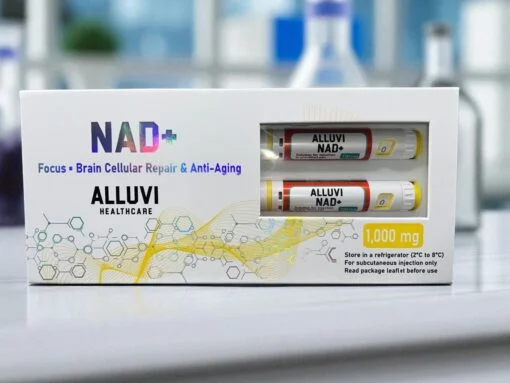
Alluvi NAD+ 1000mg in Europe and the Netherlands: Cellular Energy, Mitochondrial Function, and Longevity Science
Introduction
Alluvi NAD+ 1000mg is a term associated with growing interest in cellular energy research and longevity science. Across Europe and particularly in the Netherlands, NAD+ has become a key focus in biomedical studies due to its central role in metabolism, mitochondrial function, and cellular repair processes.
Nicotinamide adenine dinucleotide (NAD+) is a naturally occurring coenzyme found in all living cells. It plays a critical role in converting nutrients into energy and supporting essential biological processes that sustain cellular function.
This article provides a structured, SEO-optimized overview of Alluvi NAD+ 1000mg, including its biological role, scientific relevance in Europe, and regulatory context.
What Is Alluvi NAD+ 1000mg?
Alluvi NAD+ 1000mg (Nicotinamide Adenine Dinucleotide) is a coenzyme essential for life. It is involved in redox reactions that allow cells to produce energy efficiently.
It plays a key role in:
- Cellular energy production (ATP synthesis)
- Mitochondrial function and efficiency
- DNA repair mechanisms
- Regulation of cellular stress responses
As people age, NAD+ levels naturally decline, which has led researchers to study its relationship with aging and metabolic efficiency.
NAD+ and Cellular Energy Production
One of the most important functions of NAD+ is its role in mitochondrial energy production. Mitochondria convert nutrients into ATP, the body’s primary energy source.
ATP=f(NAD+,mitochondrial activity,oxidative metabolism)ATP = f(\text{NAD}^+, \text{mitochondrial activity}, \text{oxidative metabolism})
NAD+ acts as a key cofactor in metabolic reactions that convert carbohydrates, fats, and proteins into usable cellular energy.
Without sufficient NAD+, cellular energy efficiency may decline, affecting overall metabolic performance.
Why Alluvi NAD+ 1000mg Is Studied
In scientific and research contexts, NAD+ supplementation levels such as “1000mg” are often referenced in metabolic and longevity studies.
Researchers focus on NAD+ because it may influence:
1. Mitochondrial Function
NAD+ supports mitochondrial efficiency, which is essential for cellular energy production.
2. DNA Repair Processes
It plays a role in activating enzymes involved in cellular repair and maintenance.
3. Oxidative Stress Response
NAD+ is involved in regulating how cells respond to oxidative stress.
4. Metabolic Regulation
It influences metabolic pathways linked to energy balance and nutrient utilization.
Scientific Interest in Europe and the Netherlands
Europe has a strong biomedical research ecosystem, with the Netherlands being a key contributor in life sciences, metabolism, and aging research.
Interest in NAD+ research is driven by:
- Growing focus on healthy aging and longevity science
- Increasing prevalence of metabolic disorders
- Strong academic research in mitochondrial biology
- Expansion of cellular metabolism studies in EU institutions
Dutch and European research centers frequently explore NAD+ in the context of cellular aging and metabolic efficiency.
NAD+ and Aging Research
One of the most studied areas of NAD+ is its relationship with aging. As NAD+ levels decline over time, researchers investigate how this may affect:
- Cellular energy production
- DNA repair capacity
- Inflammatory balance
- Metabolic resilience
These associations are widely studied, but NAD+ remains an active research area, and its full clinical applications are still being explored.
Regulatory Status in the EU and Netherlands
In the European Union, NAD+ is regulated depending on its classification (supplement, research compound, or pharmaceutical context).
Key regulatory points:
- Not approved as a treatment for aging or disease in the EU
- Studied in research and regulated supplement categories
- Claims of medical effects are strictly controlled under EU law
- Oversight provided by national and EU regulatory authorities
This ensures safety and compliance in all approved applications.
Safety and Scientific Considerations
Because NAD+ is still under active research, several considerations apply:
- Long-term effects are not fully established
- Biological responses may vary between individuals
- Standardized clinical protocols are still evolving
- Regulatory classification depends on usage context
Researchers emphasize controlled scientific evaluation for accurate understanding of NAD+ effects.
Future of NAD+ Research in Europe
The future of NAD+ research in Europe is closely linked to:
- Longevity and aging science
- Mitochondrial biology advancements
- Metabolic health research
- Cellular regeneration studies
As scientific understanding expands, NAD+ may play a larger role in future biomedical research and metabolic health strategies.
Conclusion
Alluvi NAD+ 1000mg is part of a rapidly growing field of research focused on cellular energy, mitochondrial function, and longevity science. Across Europe and the Netherlands, it remains a key topic in metabolic and aging-related studies.
While widely researched, NAD+ is still an evolving scientific subject, and its full biological and clinical significance continues to be explored within regulated frameworks.

Reviews
There are no reviews yet.